Private label hoodie manufacturing: a complete guide, from heavyweight fabric to bulk
A complete guide to private label hoodie manufacturing: fabric and GSM, fleece vs French terry, oversized and regular fits, construction, decoration, custom labels, packaging, and the route from sample to bulk.
On this page
- What private label means for a hoodie
- What 'heavyweight' actually means
- Fleece or French terry?
- Shrinkage control
- Fit and pattern
- Oversized or regular fit?
- Construction details that separate good from cheap
- Decoration on fleece
- Labels, finishing and packing
- Custom labels in detail
- Packaging and presentation
- The sampling sequence
- From approved sample to bulk
- A tech pack checklist for a heavyweight hoodie
- Minimums and next step
What private label means for a hoodie
A private label hoodie is made to your specification and sold under your brand. The manufacturer produces it; the design, the fit, the labels and the packaging are yours, and nothing on the garment points to the factory. That is different from buying blank hoodies and decorating them, where the body, fit and fabric are someone else's standard product.
Private label gives you control over every decision in this guide — fabric weight, fit, construction, decoration, labels and packaging — and makes the garment harder to copy. It also means more decisions to make. The sections below go through them in the order a manufacturer will ask about them. Our page on private label manufacturing explains how the service works.
What 'heavyweight' actually means
Hoodie weight is stated in grams per square metre of fabric. Roughly, 280–320 GSM is a standard fleece, 350–400 GSM is heavyweight, and 420–450 GSM and above is the premium streetwear range. Weight alone does not define the hand feel: a 400 GSM brushed fleece (soft, lofted inside) and a 400 GSM loopback French terry (flat loops inside, cooler, more structured) are different garments at the same number.
Composition matters as much. 100 percent cotton gives the densest, most 'vintage' hand and the most shrinkage; cotton-polyester blends (80/20, 60/40) stabilise the fabric, reduce shrinkage and hold print better, at the cost of some softness. Decide the weight, loop type and composition together, then ask the factory for swatches at that specification before anything is cut.
Fleece or French terry?
Both fabrics start as the same kind of knit: a smooth face with extra yarn looped on the back. The difference is what happens to those loops.
- Brushed fleece has its loops brushed open into a soft, lofted pile. It is warmer and softer, and the classic choice for winter and lounge hoodies.
- Loopback French terry keeps its loops flat. It is cooler, more breathable and more structured, and gives a cleaner look — popular for streetwear and year-round hoodies.
Both are available across the weight range, so the choice is about feel, warmth and look rather than quality. Our fleece vs French terry guide compares them in detail, and the GSM guide explains how weight changes the result.
Shrinkage control
Heavy cotton fleece shrinks, and a hoodie that is perfect at the sample stage can be a size smaller after the customer's first wash. Control it at three points: specify pre-shrunk or compacted fabric, have the factory run a shrinkage test on the production lot (shrinkage in length and width after a standard wash), and build the measured shrinkage into the pattern. An enzyme or garment wash after sewing is an alternative route that also gives the softened, pre-worn look many streetwear brands want.
Fit and pattern
Most heavyweight programs today use a drop-shoulder, boxy or oversized block: a wider body, lower armhole, shorter length and a longer sleeve. Send a measurement sheet (chest, body length, sleeve length, shoulder drop, hem and cuff widths) with tolerances, or a reference garment the factory can measure. Grading across sizes should be agreed in the tech pack — a boxy block grades differently from a regular one, and 'make it like the sample but bigger' is where fit problems start.
Oversized or regular fit?
The fit decides how the hoodie looks on the hanger and in photos as much as on the body, so choose it for your customer before you choose details.
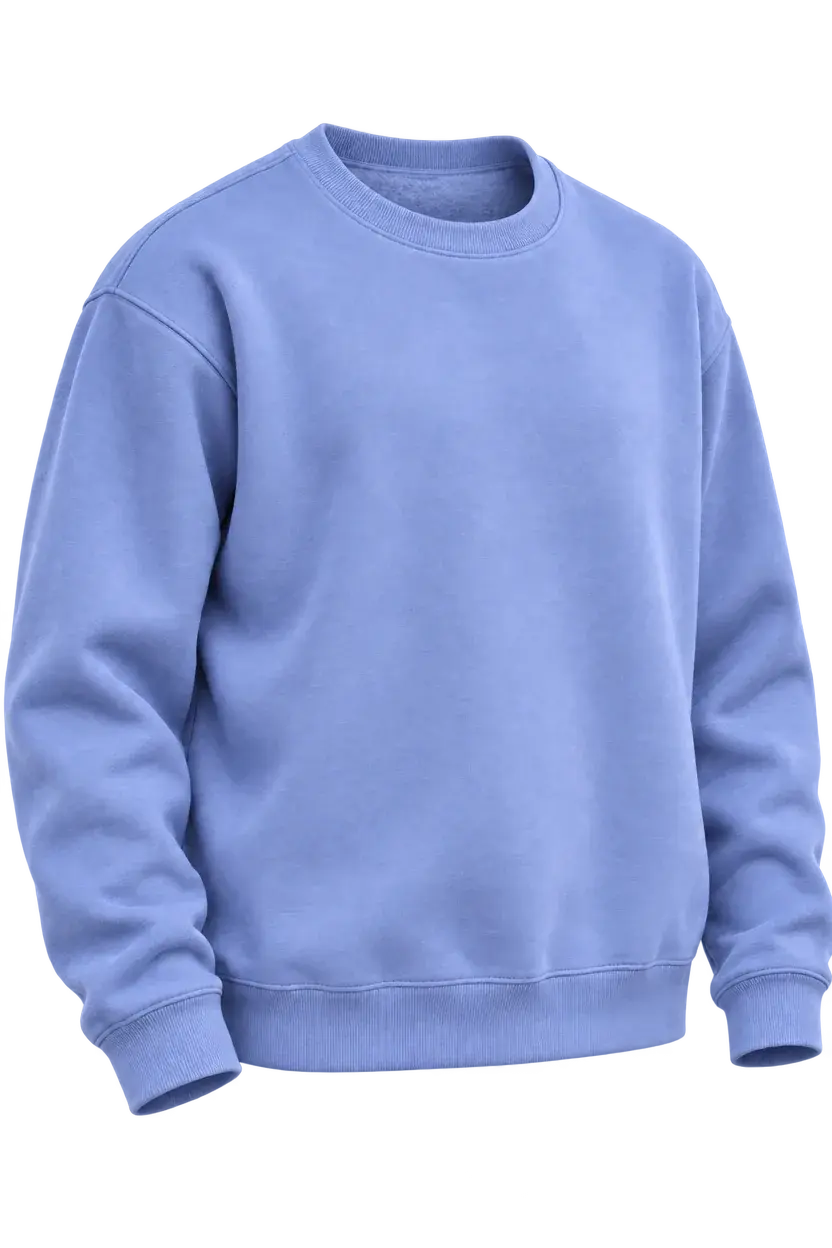
- Oversized / boxy fit — a drop shoulder, wider body, lower armhole and often a slightly shorter body with longer sleeves. It reads as streetwear and suits heavier fabrics, which hold the boxy shape.
- Regular fit — a set-in sleeve at the natural shoulder and a closer body. It is the safer choice for team, corporate and merch programmes where many body types wear the same size chart.
Whichever you choose, put it in the measurement sheet rather than in words: "oversized" means something different to every factory. If you are unsure, send a reference hoodie whose fit you like and let the sample prove it. At LOMERAQ, hoodies can be made with a set-in or a drop shoulder.
Construction details that separate good from cheap
- Hood: double-lined in self fabric, with a defined hood height and opening; metal or self-fabric eyelets and a flat or round drawcord with the tip finish specified.
- Pocket: kangaroo pouch with bartacks at the stress points, or welt pockets if the design calls for them.
- Rib: 1×1 or 2×2 rib with spandex for cuffs and hem; specify rib height. Heavy bodies need rib that recovers, or cuffs stretch out within weeks.
- Seams: coverstitch or flatlock on hem and cuff seams, twin-needle topstitching where it is part of the look; shoulder-to-shoulder tape is optional on fleece but a quality signal.
- Thread and needle: heavier fabric needs the right needle size and thread, or you get skipped stitches and puckering around the hood seam.
Decoration on fleece
Fleece takes almost every method, but each has rules. Screen printing works on both brushed fleece and terry; puff and high-density prints are the signature streetwear finishes and need a flat, stable surface, so print before any garment wash or test the sequence. Embroidery on fleece needs a backing stabiliser and a sensible stitch count — dense fills on a soft body pucker. Chenille, woven and PVC patches are sewn or heat-applied and should be placed away from seams. Every method should be proofed on the actual production fabric and wash-tested before bulk approval, not on a lighter sample fabric.
Planning your own private-label collection?Start an RFQ
Labels, finishing and packing
A woven neck label with a printed or woven care label is the standard private-label setup. Add hangtags, a polybag or custom mailer, and carton specifications to the tech pack so they are priced from the start. If the program uses a garment wash, specify it before sampling so the sample reflects the finished hand and shade.
Custom labels in detail
Labels are where a hoodie becomes your brand. Decide them early, because they are produced by trim suppliers and may carry their own minimums.
- Neck label — woven for a premium feel or printed for a softer touch.
- Size label — a separate small woven or printed label, or included in the neck label.
- Care and composition label — fibre content and care instructions, usually sewn into the side seam. The rules differ by market, so confirm what your country requires.
- Brand details — a woven tab on the hem or sleeve, an embroidered logo, or a custom drawcord tip.
- Hangtags — your branded tag with price or barcode, attached with a string or loop.
Send artwork and dimensions for each label with the tech pack, and approve the labels on the sample. At LOMERAQ, woven and printed labels, hangtags and barcode stickers can be included, and fibre and care labelling is supported to the rules you confirm for your market. See our labels and packaging page.
Packaging and presentation
Packaging is part of what your customer unboxes, and part of what your warehouse has to handle, so specify it like the garment:
- Fold and insert — how the hoodie is folded, and whether tissue paper or an insert card is added.
- Bag — a clear polybag, or a custom printed mailer for direct-to-customer brands.
- Stickers and barcodes — size and SKU stickers on each bag, so your warehouse can scan them.
- Cartons — how many pieces per carton, the carton size and the carton marking.
At LOMERAQ, polybags, tissue, custom mailers, barcode stickers and carton specifications can be set up to your standard, so the order arrives ready for your warehouse or fulfilment partner.
The sampling sequence
Plan for a development sample first — correct fabric, construction and fit, not necessarily the final decoration — and approve it as a stitched garment, not a rendering. Sample development takes a minimum of one to two weeks from locked inputs; heavy fleece and custom-dyed lots sit at the longer end. A pre-production sample with final decoration and labels then becomes the quality reference for bulk, which is inspected against it. Bulk timing is quoted per project once the specification and quantity are confirmed.
From approved sample to bulk
Once the sample is approved, bulk production follows it: the fabric is ordered or allocated, the pattern is graded across your sizes, the garments are cut, sewn, decorated, labelled and packed. The approved sample is the reference, so keep yours and label it.
Before you confirm bulk, check that the quantities per size and colour, the labels, the packaging and the delivery address are final — changes after this point are much harder to absorb. For a first collection, a small run lets you test the market before you commit to volume.
At LOMERAQ, the minimum is 25 units per order, split across sizes as you need. Custom-dyed colours can carry a fabric batch minimum, which we confirm during the RFQ. The sample fee is credited against bulk orders of 150 pieces or more. Payment is 50% on order confirmation and the remaining 50% before shipment, and bulk timing is quoted per project once specification and quantity are confirmed. Our sample vs bulk guide explains what can change between the two stages and how to prevent it.
A tech pack checklist for a heavyweight hoodie
- Fabric: composition, GSM, brushed fleece or loopback terry, pre-shrunk or compacted, stock or custom-dyed colour with Pantone reference.
- Measurement sheet with tolerances for every size, and the base size for the sample.
- Hood construction, drawcord and eyelet specification.
- Pocket type, rib type and height, seam and topstitch details.
- Each decoration: method, placement, dimensions, colours and artwork files.
- Labels, hangtags, packaging and carton specification.
- Quantity per size and colour, target market and any deadline.
Minimums and next step
LOMERAQ manufactures fleece and French terry hoodies from 280 to 450 GSM from 25 units per order, cut and sewn to your specification with decoration proofed on the production fabric. Send the tech pack, or a reference garment and photos if you do not have one yet, and a technical reviewer replies with manufacturability notes and the quotation.
Planning your own private-label collection?
Share your design or tech pack with LOMERAQ to discuss your manufacturing requirements.
From 25 units · samples min. 1–2 weeks · every request read by a technical reviewer