
C-09 / Capability · Sialkot, Pakistan
Fabric sourcing for clothing brands: GSM, composition and colour
A working library of knits, wovens and technical fabrics with verified GSM, composition and tested shrinkage.
Fabric Sourcing at a glance
- Knits
- Jersey, piqué, fleece, terry, rib
- Wovens
- Twill, canvas, nylon, poly shells
- Options
- Recycled / organic where certified*
- Matching
- Counter-sampling from your swatch
How fabric sourcing works at LOMERAQ
Send a swatch or a hand-feel description and we counter-sample from mill partners, returning options with verified composition, GSM and tested shrinkage — not catalogue claims.
Recycled and organic options are offered only where certification documents are current; certificates are named in the quote so your compliance team can verify scope.
GSM: what fabric weight tells you
GSM means grams per square metre, the standard way to state the weight of knitted fabric. As a general guide, lightweight T-shirt jersey sits around 140–180 GSM, heavyweight tees start at about 220 GSM, and brushed fleece for hoodies and sweatshirts runs roughly 280–450 GSM. Wovens are often quoted the same way, though some mills use ounces per square yard.
GSM is not the same as quality. Two fabrics at 240 GSM can feel very different depending on the yarn, the knit structure and the finishing, so read the weight together with the composition and a physical swatch. Weight also shifts with washing and finishing, which is why it is measured on the actual lot rather than taken from a catalogue.
Composition and construction
Composition is the fibre content by percentage. It drives hand-feel, shrinkage, how well a print or dye takes, and what goes on the care label. Construction matters as much: jersey, piqué, rib, terry and fleece are different knits that can use the same yarn, and twill and canvas are different weaves.
- Cotton: soft and breathable; shrinks more than synthetics unless it is pre-shrunk or compacted.
- Cotton/polyester blends: more stable in the wash and less prone to shrinking; common in fleece.
- Polyester: needed for sublimation printing, which only bonds to polyester fibres; common in sportswear.
- Elastane: added in small percentages for stretch and recovery in rib and fitted garments.
Stock colours or custom-dyed
Stock fabric is what a mill already produces in its standard colours. It is usually quicker to sample from and suits smaller quantities, because there is no dyeing run to fill.
Custom-dyed fabric is dyed to your colour reference, such as a Pantone TCX code or a physical swatch. Mills dye in lots and set a minimum quantity per colour, which depends on the mill and the fabric. That dye-lot minimum is stated in the quote. If your quantity per colour is below it, you can see that up front and choose between meeting the minimum and using a close stock colour.
Lab dips: approving a colour before bulk dyeing
A lab dip is a small piece of your fabric dyed to your colour reference before the mill dyes the bulk. Usually several variants are dyed side by side, and you pick the closest or ask for another round. The general sequence:
- You send the colour reference: a Pantone TCX code, a physical swatch or a previously approved fabric.
- The dips are made on the actual base fabric, because the same dye looks different on cotton and on polyester.
- You compare them under a stated light source, usually D65 daylight, since colours can shift between lights.
- The approved dip becomes the shade standard each bulk dye lot is checked against before cutting.
Manufacturing examples
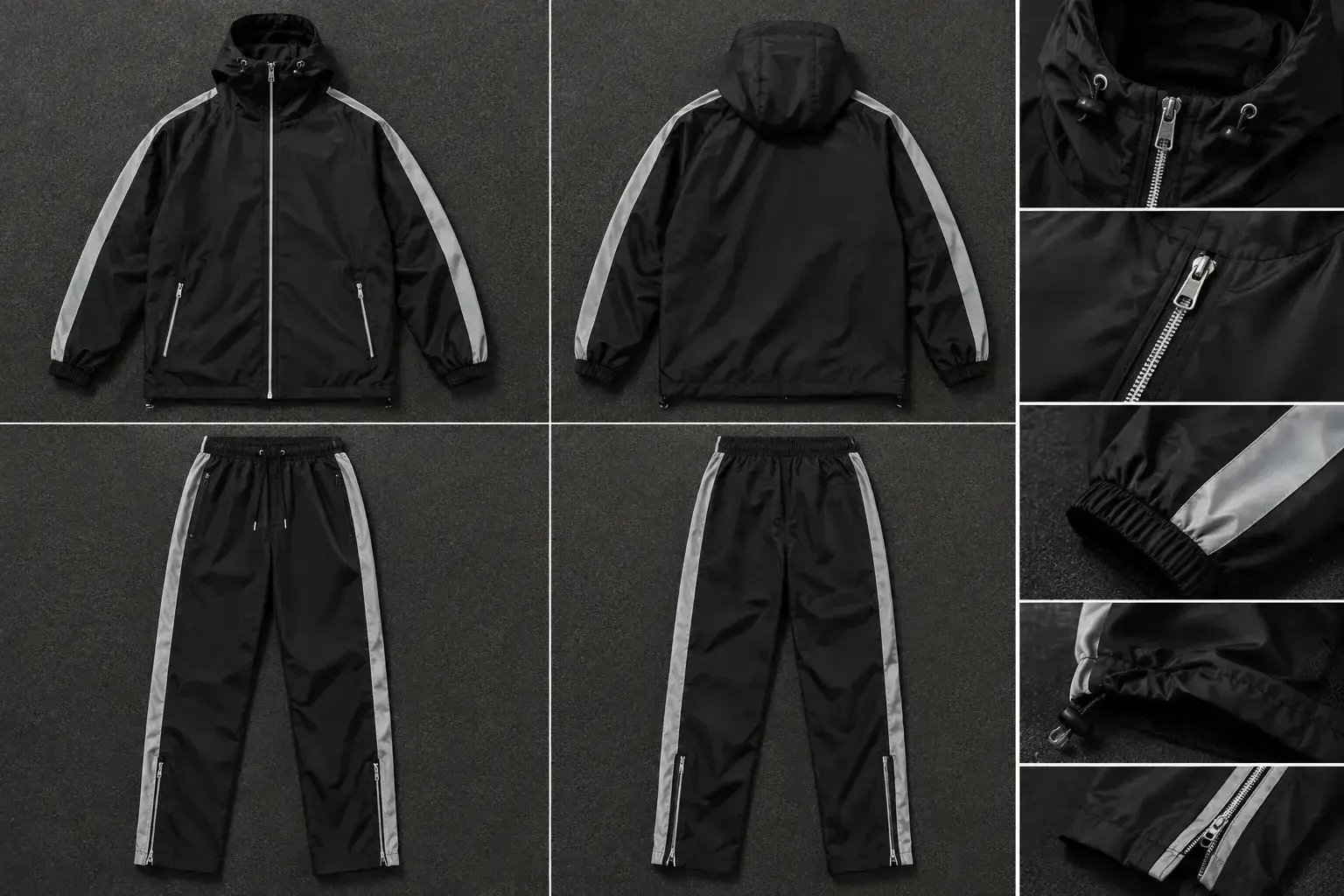
Technical windbreaker set
Hooded full-zip windbreaker with mesh-lined hood and contrast shoulder stripe, plus matching pant with side stripe, zip pockets and ankle zips — shown undecorated, ready for decoration.
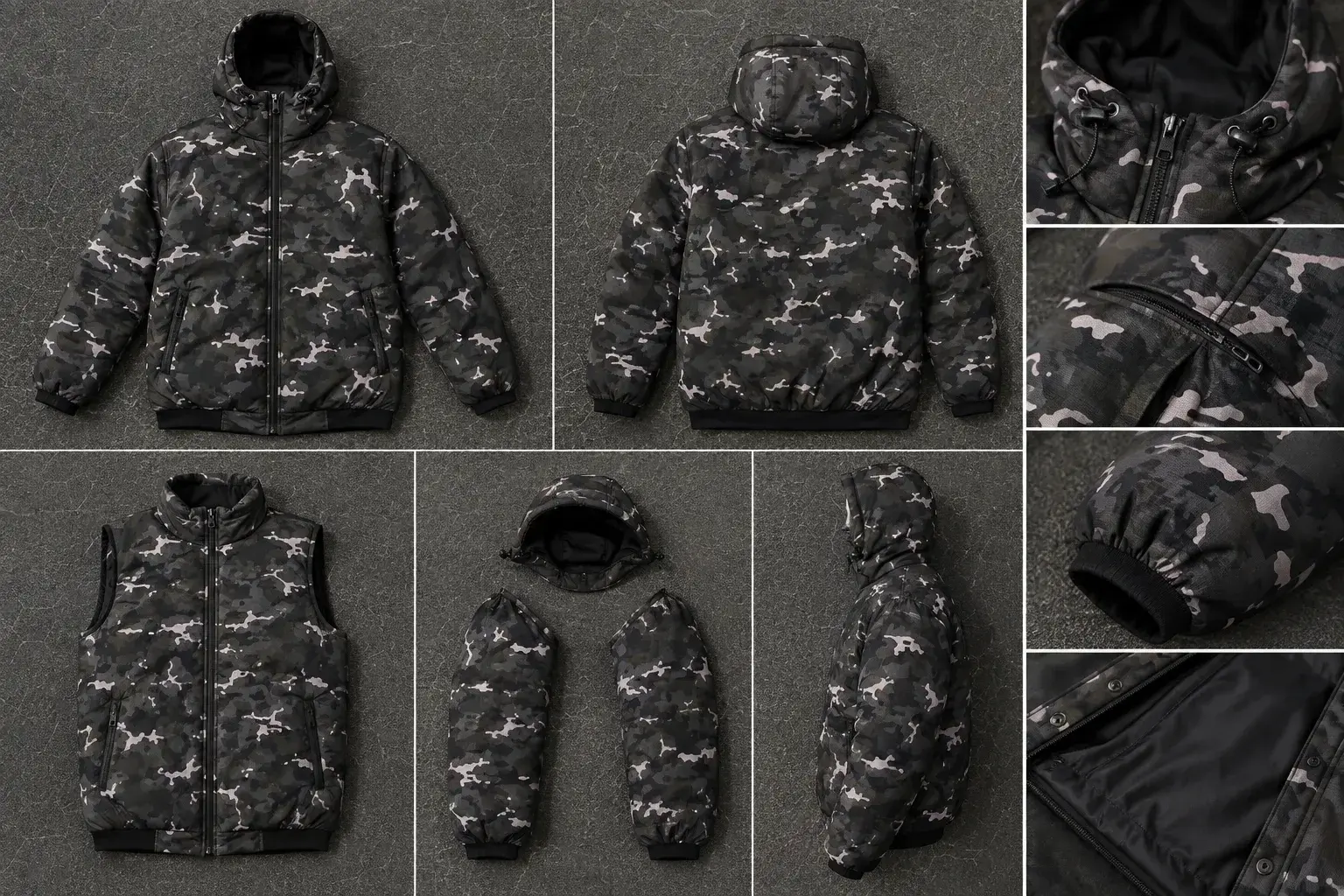
Convertible camo puffer jacket
Insulated puffer jacket with allover camouflage print that converts to a vest: zip-off sleeves, detachable hood, snap storm placket, rib hem and cuffs.
Frequently asked questions
Can you match a fabric I already use?
Send a swatch or a description of the hand-feel and the fabric is counter-sampled from mill partners. You get options back with verified composition, GSM and tested shrinkage, not catalogue claims.
Why is there a minimum per colour for custom-dyed fabric?
Mills dye fabric in lots, and each dyeing run has a minimum size set by the mill and the fabric. That dye-lot minimum is stated in the quote. For small runs, a stock colour from the mill is often the practical route.
What GSM should I choose for a T-shirt or hoodie?
It depends on the feel and the season. As general guidance, around 140–180 GSM gives a lightweight tee, about 220 GSM and up a heavyweight tee, and roughly 280–450 GSM covers most hoodie and sweatshirt fleece. Judge from swatches, not numbers alone.
Do you offer organic or recycled fabrics?
Only where the certification documents are current. The certificates are named in the quote so your compliance team can verify their scope.
Get a fabric recommendation