
C-02 / Capability · Sialkot, Pakistan
OEM and ODM clothing manufacturer: your spec or co-developed
Manufacture from your specification (OEM) or co-develop from a concept (ODM) with our pattern room and fabric library.
OEM / ODM at a glance
- OEM input
- Tech pack, measurement sheet, artwork
- ODM input
- Reference image, sketch or brief
- Spec ownership
- Your specification remains yours
- Development
- Pattern drafting, fabric sourcing, fit samples
How OEM / ODM works at LOMERAQ
OEM: you supply the complete specification and we manufacture to it, flagging manufacturability issues before sampling rather than after.
ODM: you bring a concept — a reference garment, a sketch, a mood board — and our pattern room develops the block, sources fabric options and iterates fit samples with you until the spec is locked. The resulting specification is documented and belongs to your brand.
OEM or ODM: who supplies the specification
The difference between OEM and ODM is who brings the specification. In OEM, you arrive with a finished spec — usually a tech pack — and we manufacture to it. In ODM, you arrive with an idea and the specification is developed with you before anything is produced.
Either way, the specification ends up documented and belongs to your brand. What you choose decides how much development work happens before sampling, not who owns the result.
OEM suits brands with an in-house or freelance designer and an existing tech pack. ODM suits brands launching a new category, or moving a style from another factory without a usable spec. Many programmes are a mix: an OEM tech pack for the body, with ODM development for one new detail such as a pocket or a lining.
What you supply for each route
- OEM: a tech pack with measurement sheet and size range, fabric and trim requirements, construction details, artwork with placements, and the label and packing method.
- ODM: a reference garment, sketch, mood board or written brief, plus target fabric feel, intended use, size range and the quantity you expect to order.
- Both: the products you want, how many, the markets you sell into and any certification your buyers require — which is confirmed in the RFQ, never assumed.
How development works and what you get back
For OEM, a technical reviewer checks your tech pack for manufacturability and flags issues — a missing measurement point, a seam that will not hold on the chosen fabric — before sampling, not after. For ODM, our pattern room drafts the block, fabric options are sourced, and fit samples are iterated with you until the spec is locked.
You get back sample rounds documented with photos and measurements, and a final specification: measurement chart, fabric and trim references, construction notes and decoration placements. Each sample round takes a minimum of 1–2 weeks from locked inputs. Once you approve the pre-production sample, the style moves into cut-and-sew production.
Both routes cover the full range: T-shirts, polo shirts, hoodies, tracksuits, trousers, shorts and jeans; windbreakers, bomber jackets and denim jackets; leather jackets, leather trousers and suede jackets; and motorsport kit such as karting suits, motorbike suits and gloves.
Common mistakes when choosing OEM or ODM
- Calling an incomplete tech pack OEM. If measurements or fabric are still open, it is partly ODM — say so, so the development rounds are planned and quoted.
- Sending a reference garment without saying what to keep. State which features must match — fit, fabric weight, construction — and which can change.
- Locking the spec before the fit sample is approved. Changes after the pre-production sample cost more than changes during fit rounds.
- Not asking for the documented spec. Make sure you receive the final specification so the style is yours to re-order.
Manufacturing examples
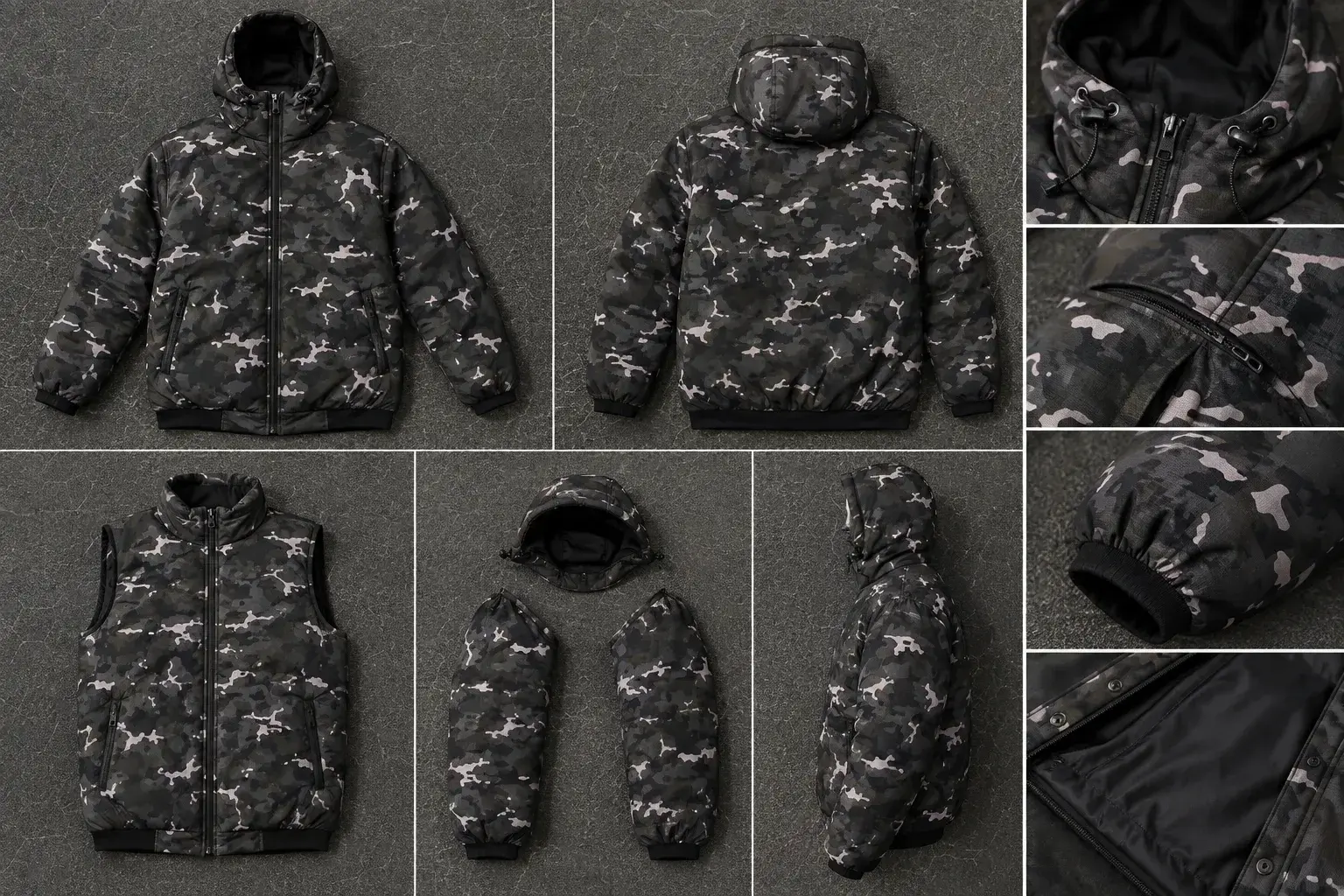
Convertible camo puffer jacket
Insulated puffer jacket with allover camouflage print that converts to a vest: zip-off sleeves, detachable hood, snap storm placket, rib hem and cuffs.
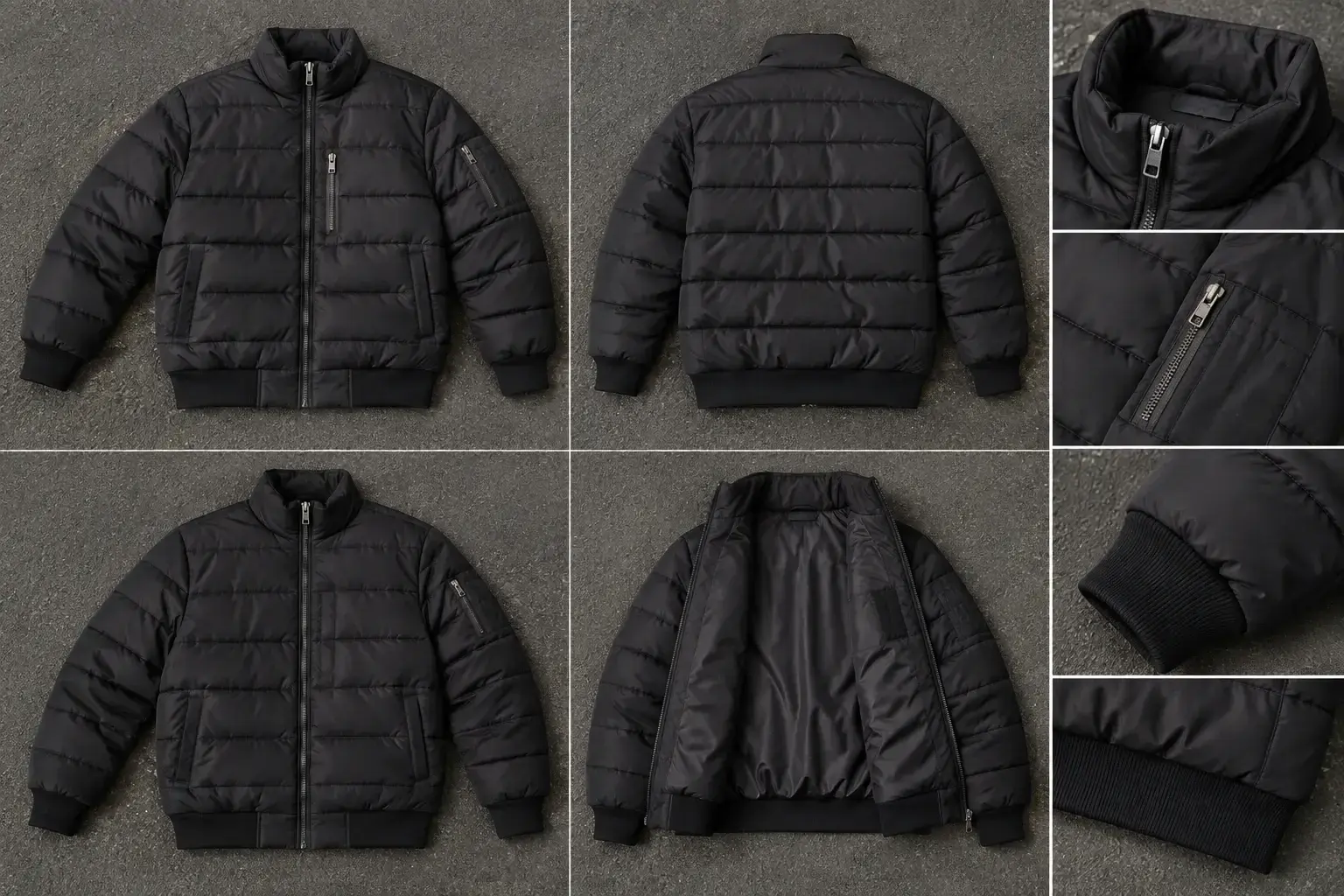
Custom quilted bomber jacket
Channel-quilted bomber jacket with stand collar, full lining, chest and sleeve zip pockets, rib trims, woven label and custom zipper pullers — shown undecorated, decoration to spec.
Frequently asked questions
What is the difference between OEM and ODM clothing manufacturing?
OEM means you supply the complete specification and we manufacture to it. ODM means you bring a concept — a sketch, reference garment or brief — and the specification is developed with you through pattern drafting, fabric sourcing and fit samples.
Who owns the specification developed under ODM?
Your brand. The resulting specification is documented and belongs to you. If you need specific files handed over, such as pattern files, raise it in your RFQ so it is agreed in the quote.
My tech pack is not finished. Should I choose OEM or ODM?
Send what you have and mark what is missing. A technical reviewer will tell you which parts can be produced as specified and which need development, so the work is quoted as a mix where that fits.
How long does development take?
Each sample round takes a minimum of 1–2 weeks once the inputs are locked; that is a planning minimum, not a promise. ODM usually needs more rounds than OEM. Bulk timing depends on quantity and is quoted per project.
Discuss product development