
C-05 / Capability · Sialkot, Pakistan
Cut and sew manufacturer: from pattern to finished garment
Full-garment manufacturing from pattern to finished piece: drafting, grading, cutting, assembly and finishing.
Cut & Sew at a glance
- Pattern room
- Digital drafting & grading
- Cutting
- Automated spreading, lot-controlled
- Assembly
- 10 in-house lines per product family; subcontract lines added per project
- Finishing
- Pressing, trimming, needle detection
How cut & sew works at LOMERAQ
Cut & sew is the core of the factory: your design manufactured from raw fabric, not modified from a blank. Patterns are drafted or ingested digitally, graded across your size range, and cut in lot-controlled lays so every panel in a garment shares a dye lot.
Assembly runs on product-family lines — knits, wovens and outerwear each have dedicated machinery and operators, which is what keeps tolerances consistent at volume.
How cut and sew works on the factory floor
Cut and sew is the physical production process: flat fabric goes in, finished garments come out. Cutting, sewing and finishing all happen in-house in Sialkot.
- Pattern: your pattern is drafted or ingested digitally and graded across your size range.
- Marker and lay: the pattern pieces are laid out in a marker — the cutting plan for the fabric — and the fabric is spread in lot-controlled lays.
- Inbound check: each fabric lot is checked for weight, shade and shrinkage before it is cut.
- Cutting: panels are cut so every panel in a garment shares a dye lot.
- Decoration: where the spec calls for print or embroidery, it is done at vetted partner units, with proofing and approval managed in-house.
- Sewing: panels are assembled on product-family lines, with inline checks on stitch density, measurements and placement.
- Finishing: pressing, thread trimming and needle detection, then a final audit against the approved sample before packing.
What you supply and what you get back
Cut and sew does not decide what the garment is — that is settled in the specification. It decides how consistently that specification is turned into every piece of the run, size by size.
You supply an approved specification: a tech pack or the spec locked during OEM/ODM development, the approved sample, quantities per size and colour, and your branding and packing instructions.
You get back finished garments made from raw fabric to your pattern — not modified blanks — inspected against the approved PP sample before cartoning.
Sewing lines and product families
The factory runs 10 in-house sewing lines, with vetted subcontract lines added per project when an order needs them. Knits, wovens and outerwear each have dedicated machinery and operators, which keeps tolerances consistent at volume.
Products made this way include T-shirts, polo shirts, hoodies, tank tops and tracksuits; trousers, shorts and jeans; windbreakers, bomber jackets and denim jackets; leather jackets, leather trousers, leather hoodies and suede jackets; and motorsport kit such as karting suits, motorbike suits, riding jackets and gloves, where protective certification is confirmed per RFQ.
Common mistakes in cut-and-sew orders
- Sending a size range without graded measurements. Grading needs a measurement chart for every size, not just the sample size.
- Splitting colours across fabric lots without agreeing it. Lot-controlled cutting keeps panels matched within a garment; shade across separate lots needs to be agreed before bulk.
- Skipping fabric shrinkage testing. A pattern drafted on unwashed fabric measurements can come out small after the first wash.
- Approving a sample made on substitute fabric. If bulk fabric differs from the sample fabric, the approved fit and shrinkage no longer hold.
- Expecting blank-customisation timing. Cut and sew starts from fabric, so bulk timing depends on quantity and is quoted per project.
Manufacturing examples
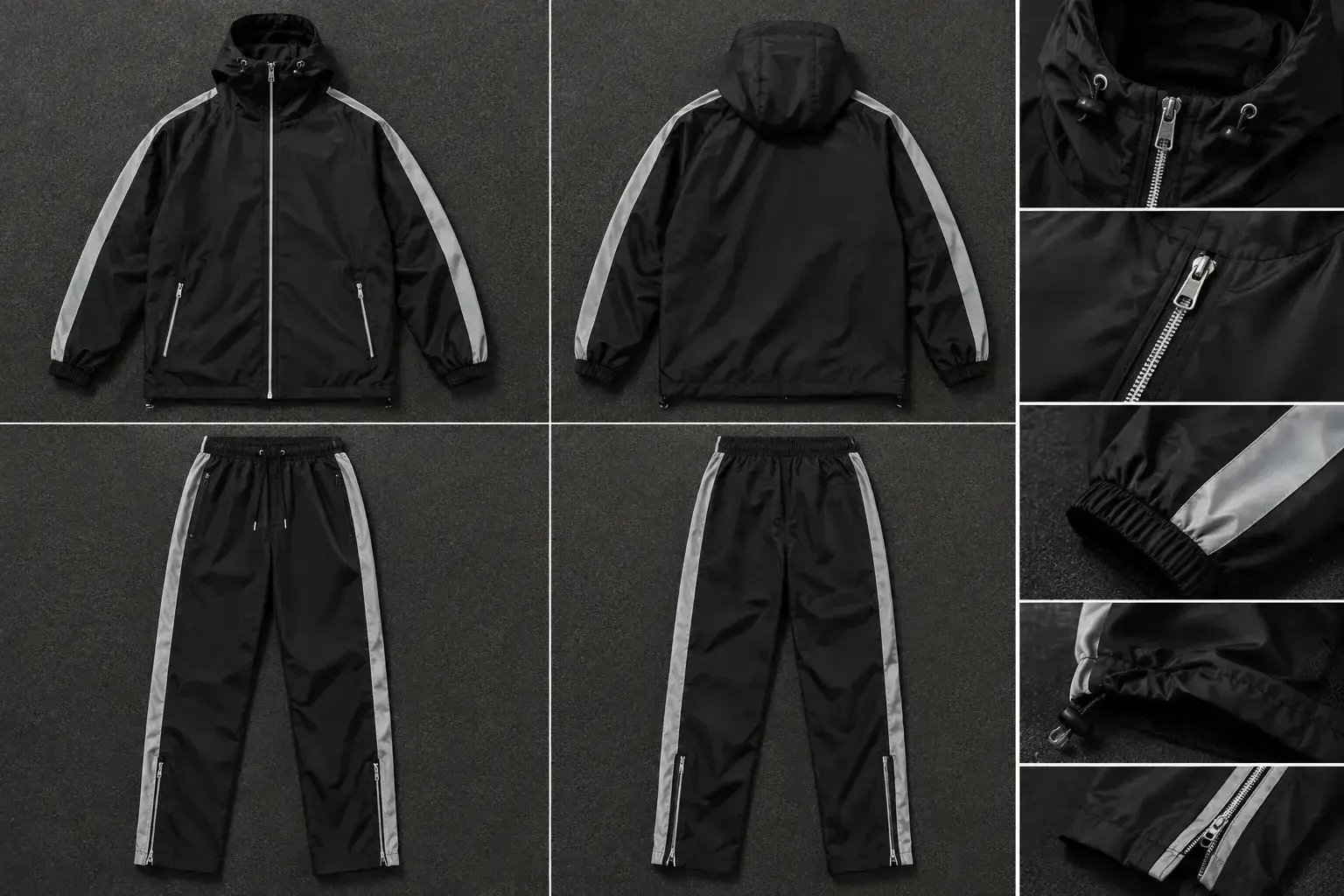
Technical windbreaker set
Hooded full-zip windbreaker with mesh-lined hood and contrast shoulder stripe, plus matching pant with side stripe, zip pockets and ankle zips — shown undecorated, ready for decoration.
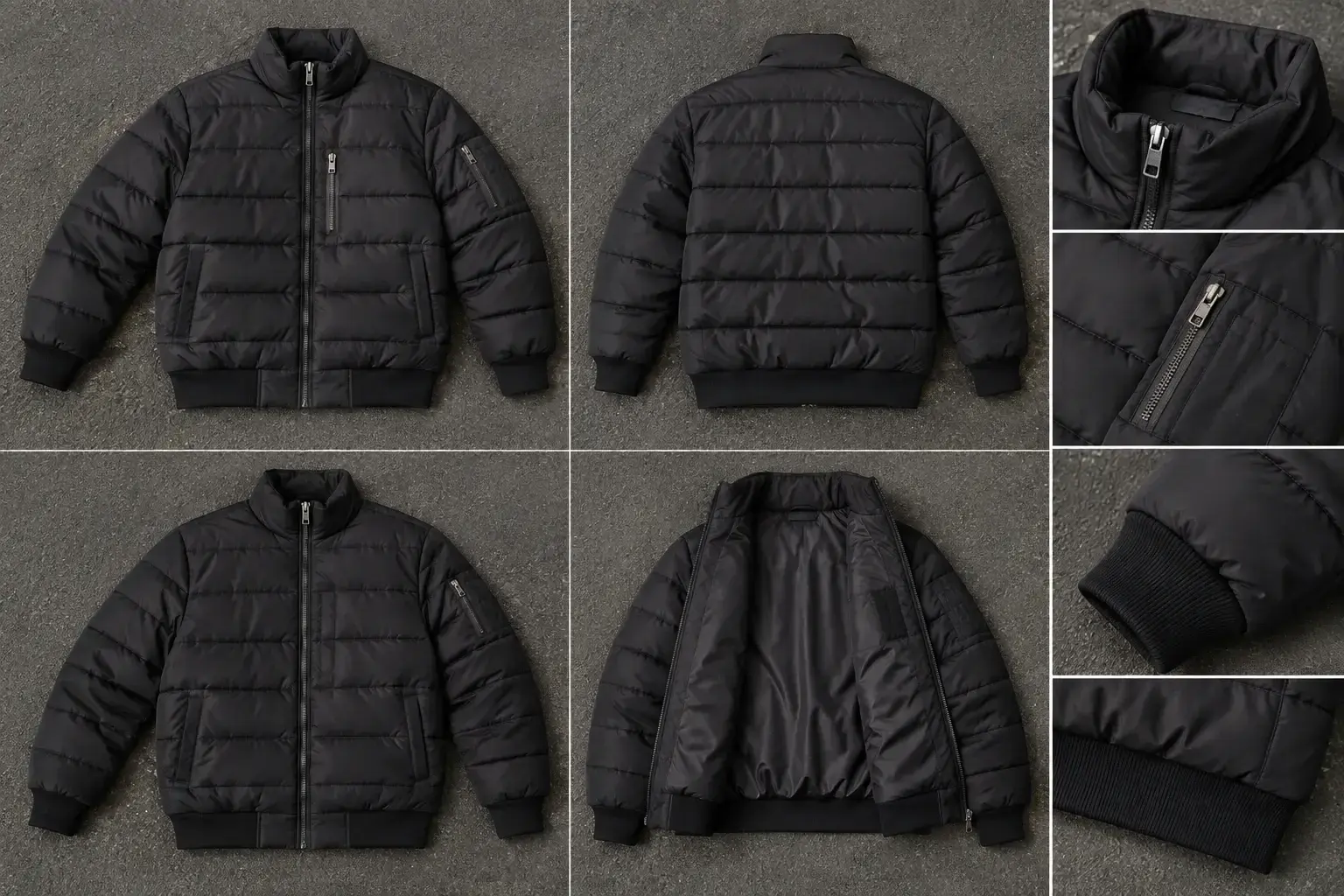
Custom quilted bomber jacket
Channel-quilted bomber jacket with stand collar, full lining, chest and sleeve zip pockets, rib trims, woven label and custom zipper pullers — shown undecorated, decoration to spec.
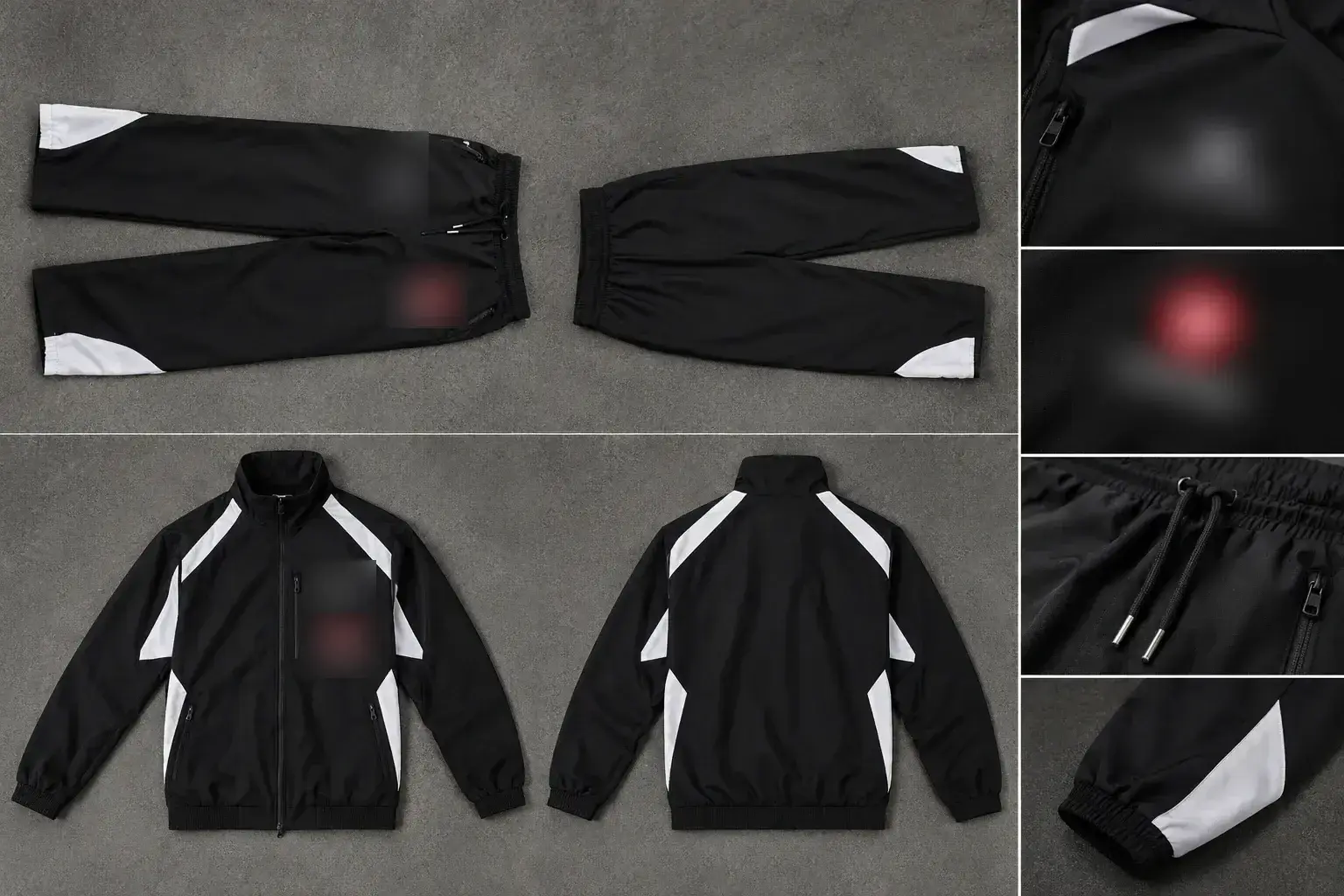
Custom colour-blocked tracksuit
Colour-blocked jacket-and-pant tracksuit from one fabric lot, full-zip stand collar, chest and leg logo prints, woven and embroidered patches, set-packed with hangtag.
Frequently asked questions
What is the difference between cut and sew and customising blanks?
Cut and sew manufactures the garment from raw fabric to your pattern, so fit, fabric and construction are yours. Blank customisation adds branding or decoration to a ready-made stock garment. LOMERAQ does not customise or relabel stock blanks: every garment is cut and sewn to the agreed specification.
Is the cutting and sewing done in-house?
Yes. Cutting, sewing and finishing are in-house; sewing runs on 10 in-house lines, with vetted subcontract lines added per project. Embroidery, screen print, heat transfer and sublimation run at vetted partner units, with proofing and sample approval managed in-house.
What is the minimum order for cut-and-sew production?
25 units per order, which you can split across sizes. Bulk timing depends on quantity and is quoted per project.
How do you keep colour consistent within a garment?
Fabric is spread and cut in lot-controlled lays, so every panel in a garment comes from the same dye lot. Each lot is also checked for weight, shade and shrinkage before cutting.
Send your tech pack