
C-08 / Capability · Sialkot, Pakistan
Apparel quality control: three inspection gates before shipping
Inbound fabric checks, inline inspection and final audit against your approved sample — three documented quality gates.
Quality Control at a glance
- Inbound
- GSM, shade, shrinkage per fabric lot
- Inline
- Stitch density, measurement, placement
- Final
- Audit vs. approved sample + packing check
- Reporting
- On request — agreed in your quotation
How quality control works at LOMERAQ
Quality control runs at three gates. Inbound: every fabric lot is checked for weight, shade and shrinkage before cutting. Inline: operators and QC staff check stitch density, measurements and decoration placement during assembly. Final: finished goods are audited against the approved PP sample before cartoning.
If your team needs a written inspection report — defect counts, measurements and packing verification — agree its scope in your quotation before production starts, so you see what was checked, not just a pass stamp.
Gate 1: inbound fabric, before anything is cut
Fabric problems are cheapest to catch while the fabric is still on the roll. At the inbound gate each fabric lot is checked against what was ordered and approved: weight (GSM), shade against the approved standard, and shrinkage after washing. A lot that is out is raised before cutting, while it can still be discussed or replaced, rather than discovered in finished garments.
Because cutting is lot-controlled, the panels of one garment come from the same dye lot. That keeps shade differences between body and sleeves out of the finished piece.
Gate 2: inline checks during sewing
Inline inspection happens on the line while garments are being assembled, not after. The checks cover stitch density, seam construction, measurements against the size chart, and the placement of prints, embroidery and labels. Catching a drifting measurement or a misplaced logo in the first bundles means correcting a few pieces instead of a whole order.
Measurements are taken against the graded spec and the tolerances set in it for each point of measure, so "within tolerance" has a defined meaning before bulk starts.
Gate 3: final inspection against the approved sample
The reference for the final gate is the signed pre-production sample, not a general idea of good quality. Finished garments are compared with it for fabric, colour, fit, decoration, labels and finishing, and the packing is checked against the packing spec: fold, polybag, stickers, carton contents and carton marks.
This is why the approved sample still matters after bulk: it is the agreed physical reference both sides compare against if a question comes up after delivery.
What AQL sampling means
AQL stands for Acceptance Quality Limit. It is a statistical sampling method, defined in standards such as ISO 2859-1 and ANSI/ASQ Z1.4, that is widely used for final inspections in garment sourcing. Instead of checking every piece, the inspector draws a random sample whose size depends on the lot size and the inspection level, and counts the defects found in it.
Defects are usually graded as critical, major or minor, and each grade has its own limit. Buyers often set limits such as 2.5 for major and 4.0 for minor defects, but the levels are a commercial choice, not a fixed rule. Critical defects, those that make a garment unsafe or unsellable, are commonly set at zero, so a single one fails the lot. The lot passes if the defects found in the sample do not exceed the acceptance number for that level. If your brand works to a specific AQL plan, state the inspection level and limits in your RFQ so the inspection basis is agreed per order.
Manufacturing examples
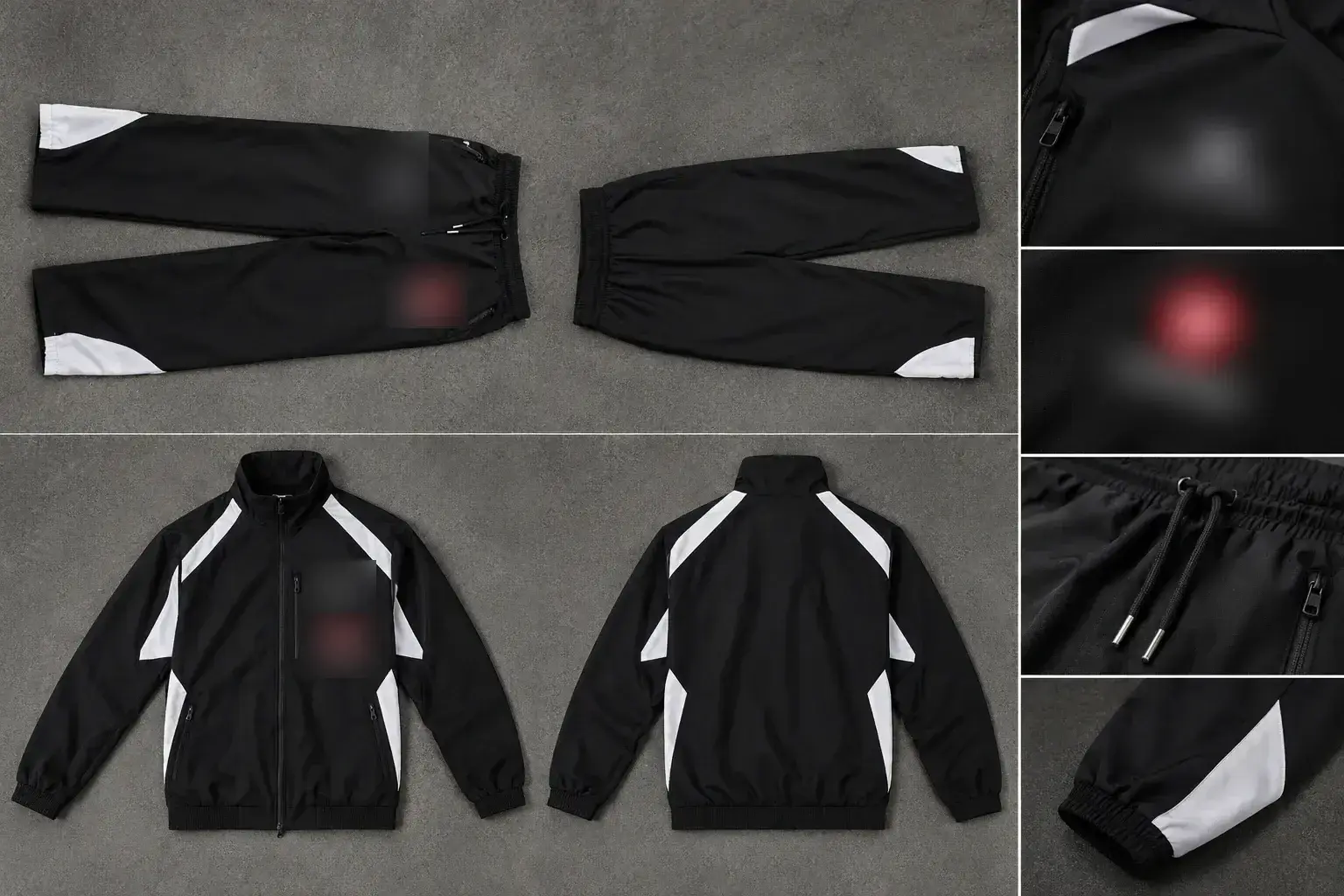
Custom colour-blocked tracksuit
Colour-blocked jacket-and-pant tracksuit from one fabric lot, full-zip stand collar, chest and leg logo prints, woven and embroidered patches, set-packed with hangtag.
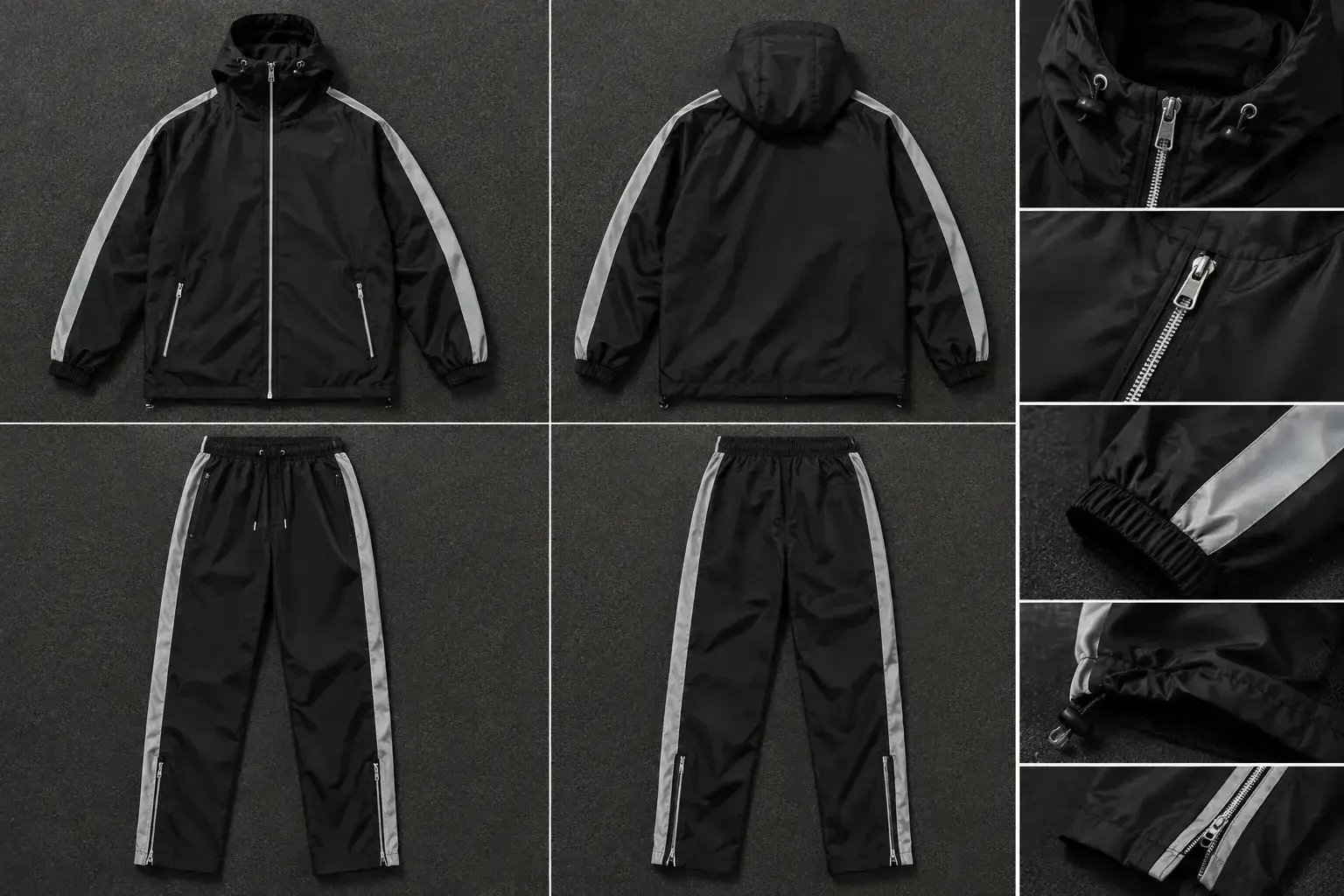
Technical windbreaker set
Hooded full-zip windbreaker with mesh-lined hood and contrast shoulder stripe, plus matching pant with side stripe, zip pockets and ankle zips — shown undecorated, ready for decoration.
Frequently asked questions
What is the approved sample used for in quality control?
It is the reference for the final gate. Finished goods are audited against the signed pre-production sample for fabric, colour, fit, decoration, labels and finishing, so the standard is a physical garment you approved rather than a description.
Do I get an inspection report?
Not automatically. Every bulk order is audited against the approved PP sample before cartoning. If your team needs a written report — defect counts, measurements and packing verification — agree its scope in your quotation before production starts.
Is AQL sampling the same as checking every piece?
No. With AQL, a random sample sized to the lot is inspected and the whole lot is accepted or rejected on the defects found in that sample. Checking every piece is 100% inspection. If you need a specific inspection basis, state it in your RFQ.
What happens if a fabric lot fails the inbound check?
It is flagged before cutting, while the fabric can still be replaced or the issue discussed with you, rather than being found in finished garments. How a failed lot is resolved depends on the fabric and the order, and is agreed with you.
See our quality process